
tRFs are emerging as key stress signals in obesity and type 2 diabetes, linking beta cell dysfunction with islet macrophage activation and revealing new clues for metabolic disease research.
How do bacteria adapt to stress at the RNA level? This study maps dynamic RNA modifications in E. coli under oxidative and acid stress, revealing epitranscriptomic changes in mRNA, rRNA and tRNA that are crucial for translation control and survival.
EZH2 drives prostate cancer progression by regulating m6A RNA modification. By stabilizing FOXA1, EZH2 boosts YTHDF1 expression, enhancing translation of METTL14 and WTAP and increasing global m6A. Targeting this axis suppresses tumor growth.
Miluzio et al. reveal that eIF6 phosphorylation is essential for ribosome recycling after termination. Cellular stress disrupts this process, causing ribosomes to stall at stop codons.
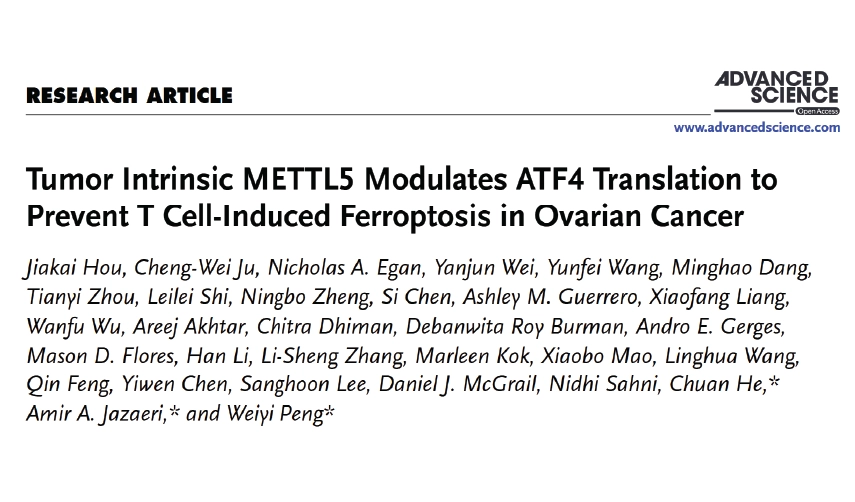
Researchers identified METTL5 as a key driver of immune resistance in ovarian cancer. By altering rRNA methylation and ATF4 translation, METTL5 suppresses ferroptosis, reducing response to immunotherapy. Targeting this axis may enhance ICB efficacy.
Large MAF transcription factors boost MYH4 expression and glycolytic metabolism in human and bovine muscle. This reveals a conserved role in fast-twitch fiber regulation, offering insight into MYH4 loss in larger mammals and potential muscle therapies.
This website uses cookies to ensure the best experience possible. More information...