

ReCet - HEK293
ReCet™ is a reconstituted cell-free translation system designed to simplify the study of complex translation dynamics.
By separating and reconstituting the core components of protein synthesis—purified ribosomes, ribosome-depleted cytoplasmic extract, and an exogenous reporter mRNA—ReCet enables researchers to investigate the contribution of individual translation players in a controlled setting.
The system offers unmatched flexibility: mix and match ribosomes, mRNA, and cytoplasmic extracts from different sources, and let translation do the rest. Protein synthesis can be detected within one hour using luminescence (for luciferase-encoding mRNA) or Western blot, providing rapid and quantitative insights into translational efficiency.
Inspired by the Arendrup et al. (1) protocol, ReCet turns a cutting-edge technique into a plug-and-play solution — standardized, shelf-stable, and ready to ship.
What sets this apart from other commercially available methods?
| ReCet (Immagina) | Other commercial human IVT | |
|---|---|---|
| What it is | Reconstituted system: purified ribosomes + extract + mRNA, mixed separately | All-in-one HeLa lysate, coupled transcription-translation |
| Flexibility | Mix & match ribosomes/extracts/mRNA from different sources | Fixed, one-source system |
| Cell source | HEK293T or K562 (your choice). Or ask for your custom cell line | HeLa only |
| Speed | Results in ~1 hour | Overnight 1-5 hours |
| Input | Add mRNA directly | Requires cloning into a specific vector first |
| Backed by | Published Nature Protocols method (Arendrup et al. 2025) | Proprietary - Undisclosed |
1. Arendrup, F. S., Andersen, K. L., & Lund, A. H. (2025). A tripartite cell-free translation system to study mammalian translation. Nature Protocols.
A cell-free translation system obtained from Human Embryonic Kidney (HEK) 293T cells
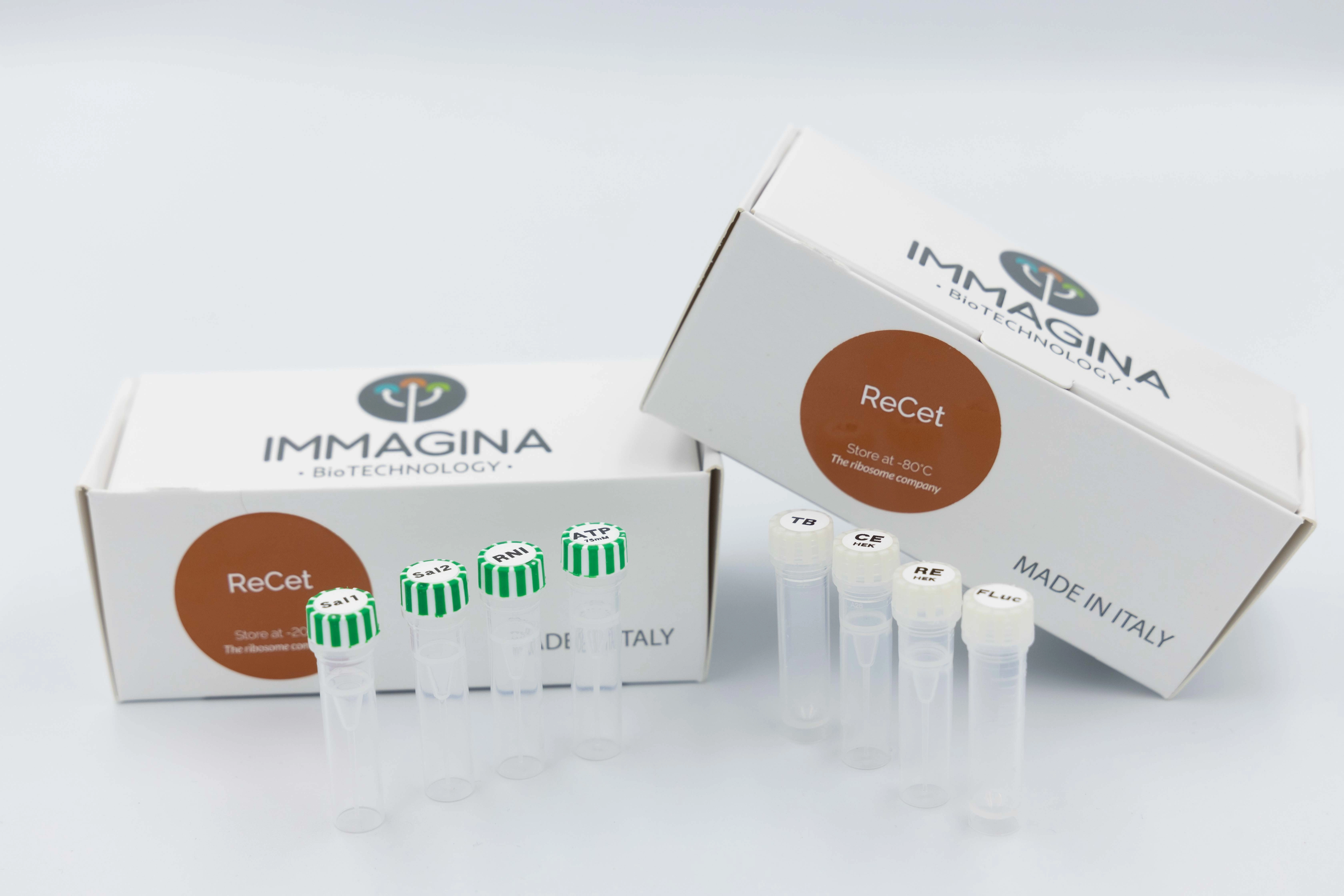
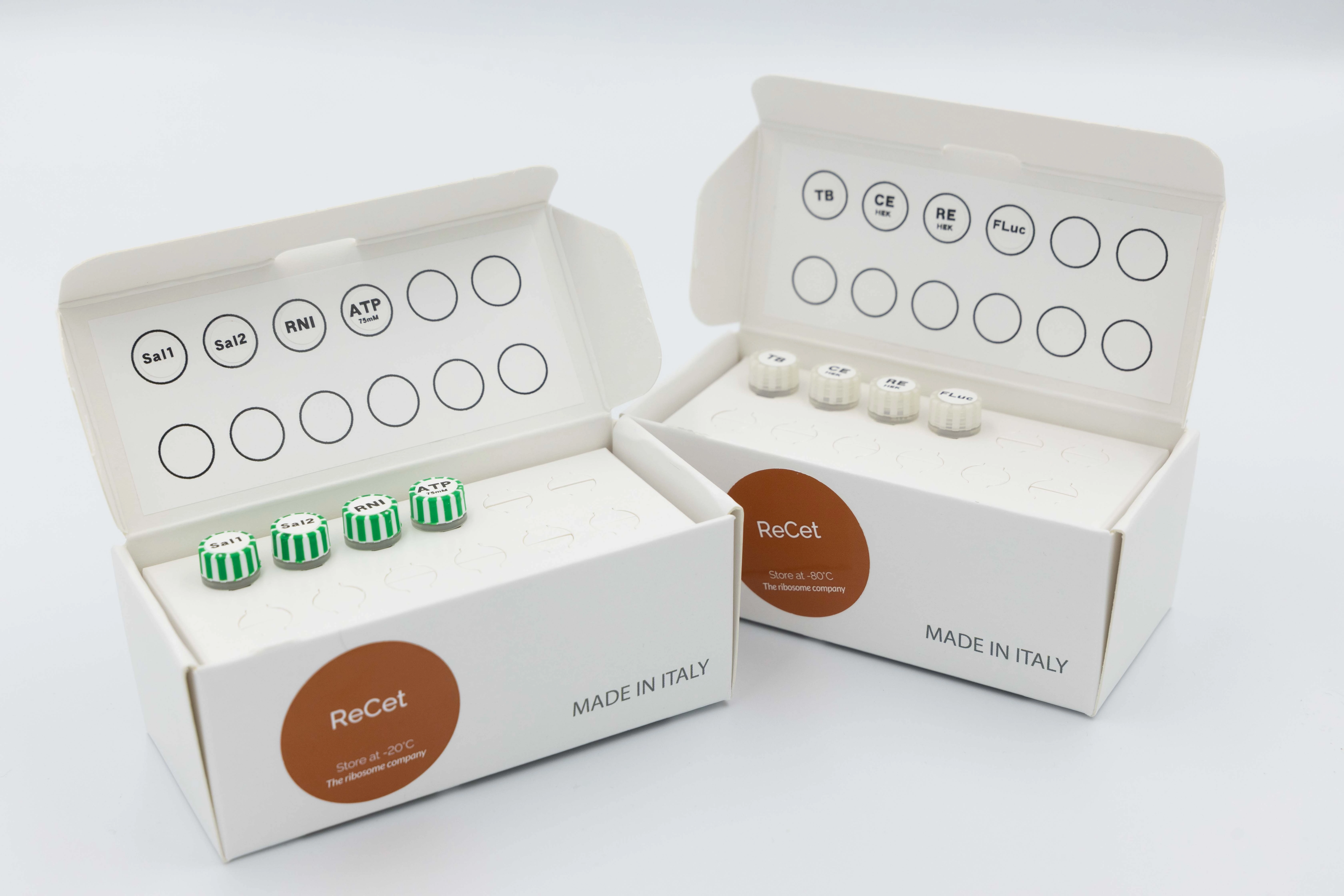
Please note that ReCet™ kit will be shipped in dry ice. Shipping is usually scheduled within 1 week of your order.
Documentation & research papers